
Getting pulled over near the Mid-County Interchange or on Germantown Pike can turn an ordinary afternoon into a crisis. A traffic charge is not a conviction, and a conviction does not automatically mean instant jail. Pennsylvania’s traffic laws are dense, and there’s usually more room to fight than most drivers realize.
That’s where McKenzie Law Firm, P.C. comes in. As a Plymouth Meeting traffic lawyer with years spent as a prosecutor before switching sides, Attorney David McKenzie has seen these cases from both angles. He knows what the Commonwealth needs to prove and where its cases tend to fall apart. Call today for a free consultation. Protect your rights, protect your future, and find out how our Plymouth meeting defense attorney can help you.
Before he defended drivers, Attorney McKenzie prosecuted cases for the Commonwealth. That experience taught him how a traffic file gets built from the ground up: what evidence prosecutors lean on, which reports get scrutinized, and which corners sometimes get cut under a heavy caseload. Every defense we build now draws on that inside view, because knowing how the other side thinks changes how you counter it.
McKenzie Law Firm, P.C. has represented Montgomery County drivers since 2010, in the courtroom and outside of it. Plenty of traffic charges get resolved through negotiation long before a trial date ever gets set, and we pursue that path whenever it serves you. Whether you’re facing a single citation or a felony-level charge, your Plymouth Meeting traffic attorney will lay out what’s realistic for your specific situation.
Once you hire us, the first step is figuring out exactly what the prosecution has and where it’s weak. That means pulling the police report, reviewing dash-cam or body-cam footage if it exists, and checking whether equipment like a radar gun or breathalyzer was properly calibrated and maintained. Small procedural mistakes show up more often than people expect, and they can change the entire direction of a case.
From there, here’s what you can expect from us:
You can also reach our office by phone any hour of the day if something urgent comes up. We treat client satisfaction as proof of whether we’re doing our job well, not just as a slogan.
Most traffic stops end in a civil infraction, like a speeding ticket, with no criminal record attached. However, Pennsylvania’s Vehicle Code lists several behaviors as traffic crimes with penalties scaling from summary offenses up through felonies.
Below we list the traffic crime charges we most often see around Plymouth Meeting:
These are the lowest-tier traffic crimes on the books, but a conviction still leaves a criminal record:
A summary offense still counts as a criminal conviction, not a ticket you pay and forget. That record can follow you into job applications, professional licensing, and higher insurance premiums long after the fine itself is paid off.
These charges carry misdemeanor grading from the start, or escalate to it on a repeat offense:
Misdemeanors carry real consequences: fines, probation, and sometimes jail, depending on your record and the facts of your case.
These are the most serious traffic charges under Pennsylvania law, carrying real prison exposure:
These cases carry serious prison exposure, but the exact range depends on the facts, your record, and how the charge gets litigated, which is exactly why every detail deserves review from day one.
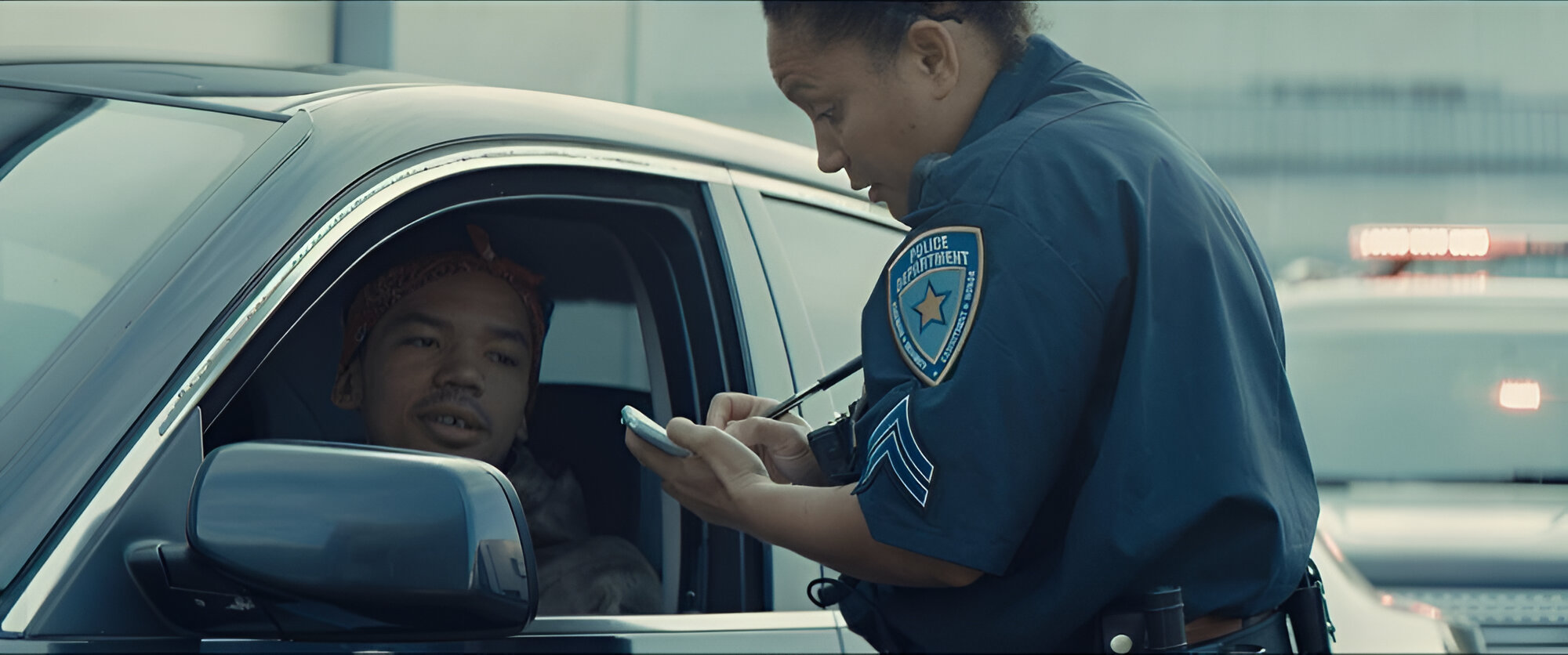
The outcome for any of these charges can shift dramatically based on whether anyone was hurt, whether you have prior convictions, and how a judge weighs the facts of your case. What follows are general ranges, not guarantees. Our Plymouth Meeting traffic crimes lawyer can review your case and explain your actual exposure.
Summary offenses typically carry fines in the $200 to $500 range, and most don’t carry jail time on their own. A first offense of driving under a DUI-related suspension is a notable exception, carrying a mandatory 60 to 90 days in jail.
Misdemeanors carry a much wider range: fines commonly fall between $300 and $5,000, and jail exposure runs anywhere from probation up to two years, depending on the specific offense and your record.
Felonies carry the steepest exposure. Fines can reach $15,000 to $25,000, and prison exposure ranges from three years up to a decade or more, particularly where a mandatory minimum sentence applies.
Pennsylvania tracks moving violations with a point system, and it adds up faster than most drivers expect. Reach six points for the first time, and the Pennsylvania Department of Transportation (PennDOT) gives you a choice between a written exam or Driver Improvement School. Reach eleven points, and your license is suspended automatically under 75 Pa. C.S.A. § 1539, calculated at several days of suspension for every point on your record, with no hearing required.
Certain convictions trigger suspension regardless of your point total. DUI, homicide by vehicle, and fleeing or eluding police all carry mandatory suspension under 75 Pa. C.S.A. § 1532, separate from any fine or jail sentence a judge might impose on top of it. Points can also raise your insurance premiums for years, even after they drop off your license.
None of this plays out the same way for every driver. Your actual penalty depends on the specific charge, your driving history, and how the county handles your case. You should treat these ranges as a starting point for a conversation with our law firm, not a prediction of what will happen to you.
A conviction isn’t necessarily the end of the conversation. Some first-time, non-violent offenders qualify for Accelerated Rehabilitative Disposition (ARD), a pretrial diversion program that can keep a charge off your record if you complete its requirements, often including classes, community service, or a drug and alcohol evaluation. Eligibility comes down to your record and how the county screens the specific charge.
In Montgomery County, your application goes to the District Attorney’s Office, generally within 30 days of your preliminary hearing, and typically requires waiving that hearing along with formal arraignment. If accepted, you’re placed under supervision through the Montgomery County Probation Department for a period that can run anywhere from six months to two years, along with fines, court costs, and any community service the DA’s office assigns. Successfully complete it, and the charge is dismissed, opening the door to expungement.
A traffic crime charge in Plymouth Meeting moves through one of two courts, depending on what you’re charged with. Which court hears your case affects how it’s resolved, how much authority the judge has, and what your realistic timeline looks like.
Every traffic crime charge in Plymouth Meeting begins at the magisterial district court that covers Plymouth Township, near the Mid-County Interchange where the Pennsylvania Turnpike meets I-476. For summary offenses, such as reckless driving, careless driving, or a first offense of driving under suspension, this court has full authority to resolve your case from start to finish, including trial if you want one.
For misdemeanor and felony charges, this is also where your case begins:
Magisterial district judges don’t conduct jury trials and can’t impose felony-level sentences, so anything more serious than a summary offense only starts here before moving on.
Once a district judge finds enough evidence at the preliminary hearing, misdemeanor and felony charges get bound over to the Montgomery County Court of Common Pleas in Norristown. This is Pennsylvania’s court of general jurisdiction, with the authority to hold jury trials and hand down the full range of sentences the law allows.
From here, your case moves through:
This is where Attorney David McKenzie’s years on the other side of the courtroom count most, knowing how the Commonwealth builds a case at this level, and where it tends to fall apart.
A traffic crime charge doesn’t have to define what comes next for you. With the right defense, our Plymouth Meeting traffic lawyer can seek a reduced charge, a dismissal, or a clean record.
McKenzie Law Firm, P.C. offers a free consultation to walk through your charge and lay out your options, with no pressure and no obligation. Call today to get started.
Will I automatically lose my license if I’m convicted?
Not necessarily. Some convictions carry a mandatory suspension, but plenty don’t, and the length depends on your specific charge and driving record. We’ll give you an honest read on what’s at stake once we’ve reviewed your case.
I have an out-of-state license. Does a Pennsylvania conviction follow me home?
Often, yes. Pennsylvania belongs to the Driver License Compact, which shares conviction and suspension information with your home state’s licensing agency. Depending on the offense, your home state may apply its own penalties on top of whatever happens here.
Can I still fight my case if I already told the officer I was at fault?
Yes. What you said during a stop isn’t the end of the story. There may be problems with how the stop was conducted, how evidence was gathered, or how the charge was written up, and we’ll look at all of it before assuming anything is settled.
How will I know what’s happening with my case while it’s pending?
We update clients at every stage, not just when a hearing gets scheduled. Once you’re a client, you’ll also be able to reach Attorney McKenzie directly by phone, email, text, or social media whenever a question comes up.